This post contains affiliate links. If you buy through them, I may earn a small commission at no extra cost to you. Learn more.
Most of the garden is winding down right now. The tomatoes are done, the squash vines are brown, and it feels like the season is over. That's exactly when fava beans want to go in. So this week's Seed to Table is about the bean you plant when everything else is finished, and one of the oldest crops people have ever grown.
The story: a bean that's older than bread (maybe)
In 2015, archaeologists in Israel dated charred fava seeds from Neolithic sites in the Galilee to roughly 10,000 years ago. They found so many of them stored together that the researchers argued people had to be growing them, not gathering them wild. Their read was that legumes like fava may have been a staple there before grain farming took hold (Weizmann Institute).
Here's the part I find kind of wild. Nobody has ever found the fava's wild ancestor. It's gone. The only reason this plant still exists is that people kept saving its seed and planting it again for ten thousand years. You don't get a better argument for seed saving than that.
Today you'll hear them called fava beans, broad beans or faba beans depending on where you live. Same plant, Vicia faba. It's in the same family as peas, and it acts more like a pea than like the green beans most of us grow in summer.
What makes fava beans special
- They like it cold. Favas germinate and grow in cool soil, the way peas do. Hot weather is what slows them down.
- They feed your soil. Like other legumes, favas pull nitrogen from the air and store it in little nodules on their roots. A lot of farmers grow them over winter just for that.
- Big plants, big pods. They stand up on their own as bushes, usually 3 to 5 feet tall, with pods that can run 7 to 9 inches long.
- Pretty flowers. White blossoms with a black spot, and bees love them, which matters later if you're saving seed.
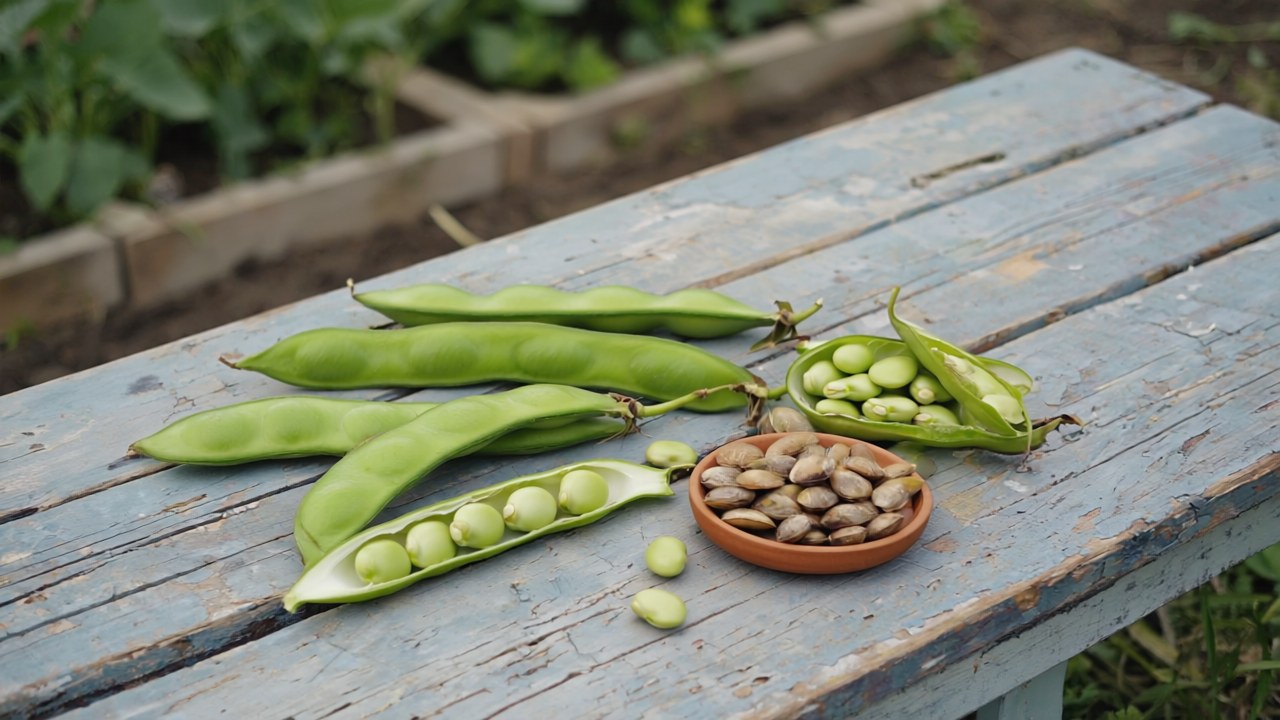
- Eat them fresh or dry. Pick them green for fresh beans in spring, or let them dry on the plant for soup beans.
How to grow fava beans
When to plant
Where winters are mild, think the Pacific Northwest, much of California and the South, fall is the time. Oregon State University says cold-hardy varieties like Aquadulce Claudia can go in late September or October there (OSU). Territorial Seed suggests planting about 3 weeks before your first killing frost if you're in zone 7 or warmer, and says its fava cover crop is hardy to at least 10°F.
If your winters are colder than that, hold your seed and plant as early in spring as the soil can be worked. One New England trial found fall-planted favas grew a lot of leaves but never made pods, so don't feel bad about waiting.
How to plant
- Pick a sunny spot that drains well. Soggy soil at planting time invites root rot.
- Plant seeds 1 to 3 inches deep and about 5 to 6 inches apart in the row, with rows 2 to 3 feet apart.
- Sow a few extra in fall to make up for any plants winter takes out.
- Give them something to lean on. Tall varieties can flop in wind. A couple of stakes and a string down each side of the row does the job.
Care and harvest
Favas don't ask for much. Keep the bed weeded while they're small and water if spring gets dry. Black aphids sometimes cluster on the growing tips. Pinching off those tips once the plants are flowering well helps, and the tips are good to eat, too.
For fresh beans, pick when the pods are plump and the beans inside are full size but still green. Oregon State says that's about 30 days before the beans would be dry. A spring planting takes roughly 130 to 150 days to reach dry seed, and an overwintered one can take around 240. For dry beans, just leave the pods on until they turn black and rattle.
Growing them for your soil
If you're growing favas mainly as a cover crop, cut them down when about half the plants are flowering and leave the roots in the ground. UC Master Gardeners explain that once the plants start making seed, they pull that nitrogen back out of the soil and into the beans (UC ANR). So you kind of have to choose: beans for you, or nitrogen for next year's tomatoes. In a bigger garden, you can do a row of each.
How to save fava bean seed
Fava flowers can pollinate themselves, but bees cross them too, and the amount of crossing varies a lot. Seed saving guides usually suggest keeping different fava varieties 160 to 500 feet apart. A 2023 study in Australia found it took more than about 500 feet (150 meters) to keep crossing under half a percent (Agronomy, 2023). The easy fix for a home garden is to grow just one fava variety each year. Favas won't cross with your green beans, runner beans or peas.
- Leave the pods on your best plants until they turn black and dry.
- Pick them before they split open, then shell the beans.
- Let the beans dry somewhere airy for another week or two.
- Store them in a jar, labeled with the variety and the year. Good fava seed keeps for several years.
Save from as many plants as you can, not just one, so the variety keeps its range. This is the same thing every grower in Open Sesame told me in one way or another: a variety stays alive because people keep planting it and sharing it. If you're just starting out, my interview with Ira Wallace is a good place to begin.
Is it good for you?
Pretty good. A cup of cooked dried favas has about 13 grams of protein, 9 grams of fiber and around 177 micrograms of folate, which is a big chunk of what you need in a day (USDA data). Fresh green favas are lighter but still a solid source of protein for a vegetable.
One real warning, though. Some people have an inherited condition called G6PD deficiency, and for them fava beans can set off a dangerous reaction called favism, where red blood cells break down. Cooking doesn't prevent it. It's more common in people with Mediterranean, Middle Eastern, African or Asian ancestry, and plenty of people don't know they have it (Singapore Food Agency). If you've never eaten favas before, it's worth knowing. And if you know you have G6PD deficiency, skip them.
Recipe: Spring favas with garlic, lemon and mint
This is the simplest way to taste fresh favas, and it's the reward for planting them now. It's a spring dish, so save this one for when your first pods come in. You need to shell them twice, which sounds fussy, but it goes fast with a friend and a podcast.
Ingredients
- About 2 pounds fresh fava pods (makes roughly 1 to 1½ cups of beans)
- 2 tablespoons olive oil
- 1 clove garlic, sliced thin (Music garlic if you planted it!)
- Juice of half a lemon
- A small handful of fresh mint, torn
- Salt and pepper
- Good bread or a little crumbled feta, if you like
Directions
- Pull the beans out of their pods.
- Drop them into boiling salted water for 1 to 2 minutes, then into a bowl of ice water.
- Pinch each bean and pop it out of its pale outer skin. The bright green bean inside is the one you want.
- Warm the olive oil in a pan over medium-low heat and cook the garlic for a minute, until it smells good but isn't brown.
- Add the beans and toss for 2 to 3 minutes, just to warm them through.
- Take the pan off the heat. Add the lemon, mint, salt and pepper. Pile it on toast or top it with feta.
Where to get fava bean seed
Favas are easier to find than Seminole pumpkin was, but the good overwintering varieties sell out in fall, so order soon if you're planting now.
- SeedsNow, Broad Windsor: An heirloom, cold-hardy bush fava, about $2.99 for a sampler pack. In stock as of this writing. Their Aguadulce is sold out right now.
- Reimer Seeds, Aquadulce: The classic fall-planting heirloom from the UK, with long pods of 7 to 8 beans. They also carry Broad Windsor, an English heirloom from the 1800s.
- Territorial Seed, Small Fava: Sold by the pound as a cover crop, if you want a whole bed of soil-builders. The 1 pound size was sold out as of this writing, so check back.
Or check the bulk bins at a Middle Eastern or Mediterranean grocery. Whole dried favas from there will often sprout. You won't know the exact variety, but you'll have beans, and next year you'll have your own seed.
Ten thousand years of people saving one bean. That's the kind of story Open Sesame: The Story of Seeds is about. You can watch it here. If you missed the last two Seed to Table posts, there's Music garlic (still time to plant) and Seminole pumpkin.
Next week on Seed to Table: Lacinato kale, the dinosaur kale that gets sweeter after a frost.