
This post contains affiliate links. If you buy through them, I may earn a small commission at no extra cost to you. Learn more.
Welcome to Seed to Table, a new weekly series where I spotlight one heirloom plant: where it came from, how to grow it, how to save it, why it's good for you, and what to cook with it. There's no better place to start than the one crop you plant just as everything else in the garden is winding down: garlic. And no better garlic to start with than Music.
The story: a garlic that traveled in a suitcase
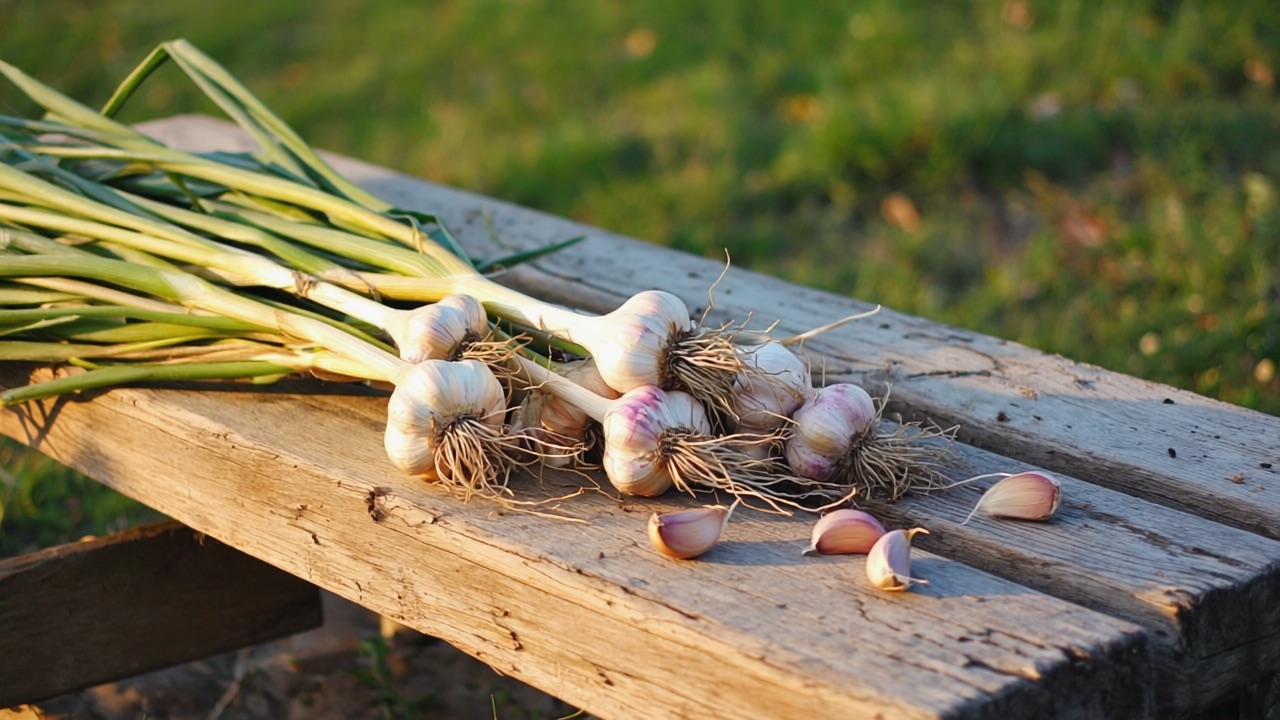
Music garlic isn't named for a song. It's named for a person. As the story goes, Al Music brought this garlic from Italy to Ontario, Canada, in the 1980s and planted it on his farm in Norfolk County. It thrived in the harsh Canadian winters, and in 1985, when he and a dozen other growers founded the Ontario Garlic Growers Association, they named the variety in his honor (Specialty Produce).
That's how most heirlooms survive. Not in a corporate lab, but in the pocket or suitcase of someone who couldn't imagine leaving home without it. Today Music is one of the most widely grown garlics in North America, prized for huge cloves, easy-to-peel wrappers and a long shelf life. It started with one person who kept planting it.
What makes Music special
- Type: Porcelain hardneck. Hardnecks grow a flower stalk (the "scape") and do best in cold-winter climates.
- Cloves: Only 4 to 6 per bulb, but they're big, so there's a lot less peeling.
- Flavor: Rich and hot when raw, mellow and sweet when roasted.
- Storage: Keeps 6 to 9 months when cured well, longer than most hardnecks.
- Hardiness: Built for the cold. It's a favorite from New England to the Canadian prairies.
How to grow Music garlic
Garlic is one of the easiest and most rewarding crops for beginners. You plant it in fall, mostly forget about it all winter, and dig up a harvest the following summer.
When to plant
Plant cloves in fall, roughly 4 to 6 weeks before the ground freezes, once the soil has cooled to around 50–60°F (Old Farmer's Almanac). In much of the northern U.S. that's October. In warmer zones, you can plant into November or even December. The cloves need that time to grow roots before winter, and they need the cold itself to form bulbs.
How to plant
- Start with good seed garlic. Buy from a seed garlic grower, not the grocery store. Supermarket garlic is often treated to prevent sprouting and may not be suited to your climate.
- Break the bulbs apart a day or two before planting. Keep the papery skins on, and plant only the biggest cloves. Big cloves make big bulbs.
- Prepare loose, rich soil in full sun. Work in a few inches of compost.
- Plant pointy end up, 2 to 3 inches deep, about 6 inches apart, in rows 10 to 12 inches apart.
- Mulch heavily with 4 to 6 inches of straw or shredded leaves. Mulch protects the cloves from freeze-thaw heaving, holds moisture and keeps weeds down.
Spring and summer care
Green shoots will poke through the mulch in early spring. Keep the bed weeded, since garlic hates competition, and water about an inch a week until the leaves begin to yellow. In early summer, Music sends up scapes, curly flower stalks. Snap them off when they make a loop. The plant then puts its energy into the bulb, and you get a bonus harvest. Scapes are delicious in pesto, stir-fries and scrambled eggs.
Harvest and curing
Harvest in mid-summer when about a third to half of the leaves have turned brown. Each green leaf left is a layer of wrapper around the bulb, so don't wait too long. Loosen the soil with a garden fork rather than pulling. Then hang bundles in a shady, airy spot for 3 to 4 weeks to cure. Once the wrappers are papery, trim the roots and stalks and store the bulbs somewhere cool and dry (Harvest to Table).
How to save garlic "seed"
Most people don't realize that garlic almost never makes true seed. Every clove you plant is a genetic copy of its parent, passed hand to hand, and in the case of Music, from one grower to the next since the 1980s. Some garlic lines have been carried this way for thousands of years.
That makes garlic the easiest seed-saving project there is. At harvest, set aside your biggest, healthiest bulbs for replanting in fall. Don't eat them, however tempting they look. Repeat this each year, and your garlic slowly adapts to your soil and your climate. After a few seasons you won't just have Music garlic. You'll have your Music garlic.
This is exactly what we explored in Open Sesame: seeds that belong to no one company, kept alive because ordinary people keep planting them. As I wrote recently, the permission is in the seed.
Why garlic is good for you, and the 10-minute trick
Garlic has been used as food and medicine for thousands of years, and research has linked it to benefits for heart health, blood pressure and immune function (Linus Pauling Institute). Much of that is credited to allicin, a sulfur compound that gives garlic its bite.
Oddly enough, a whole garlic clove contains no allicin. It forms only when you crush, chop or mince the clove, which lets two separate compounds meet. Heat stops the reaction. So researchers suggest a simple habit: crush or chop your garlic and let it sit for about 10 minutes before cooking to let the beneficial compounds form (ScienceDaily).
Growing your own organically has another benefit: you know exactly what went into the soil and what didn't. And fresh, home-cured garlic has a flavor that store-bought bulbs, often shipped from halfway around the world, rarely match.
Recipe: Roasted garlic and white bean spread
Music's big cloves are perfect for roasting. This spread uses the garlic two ways, roasted for sweetness and raw for a kick (and that allicin).
Ingredients
- 2 whole bulbs of Music garlic, plus 1 extra raw clove
- 2 tablespoons olive oil, plus more for drizzling
- 1 can (15 oz) white beans (cannellini or navy), drained and rinsed, or about 1½ cups home-cooked
- Juice of half a lemon
- A few sprigs of fresh rosemary or thyme, chopped
- Salt and pepper to taste
Directions
- Heat the oven to 400°F. Slice the top quarter-inch off each bulb, drizzle with olive oil, wrap in foil and roast for 40 to 45 minutes, until soft and golden.
- While the garlic roasts, crush the raw clove and let it sit for 10 minutes.
- Squeeze the roasted cloves out of their skins into a food processor. Add the raw garlic, beans, lemon juice, herbs and 2 tablespoons of olive oil.
- Blend until smooth, adding a splash of water if needed. Season with salt and pepper.
- Serve with a drizzle of olive oil on crusty bread, crackers or fresh vegetables.
Where to get Music seed garlic
Seed garlic sells out fast in the fall, so if one source is out, try the next. Hardneck garlic should be in the ground by late October in most northern gardens.
- Grow Organic: Certified organic Music garlic, sold by the pound. The top pick if you want certified organic.
- Hudson Valley Seed Company: Grown organically by two small New York farms, Skymeadow Farm and Katchakie Farm. A wonderful way to support a mission-driven seed company and the small growers behind it.
- SeedsNow: Just want to try it? SeedsNow sells Music garlic in small amounts, from a 3-clove sampler up to a pound. It's untreated and non-GMO, though not certified organic, and a low-cost way to test it in your garden.
And if a neighbor grows it, ask for a few bulbs. That's how Music got here in the first place.
The seeds in this story have a bigger story. Open Sesame: The Story of Seeds follows the farmers, gardeners and seed keepers working to protect our food heritage. Watch the film here. And for more on what to plant when, check out our seed chart.
Next week on Seed to Table: the Seminole pumpkin, a squash that has fed Florida for centuries.