This post contains affiliate links. If you buy through them, I may earn a small commission at no extra cost to you. Learn more.
It's the week when every porch in America gets a pumpkin that nobody plans to eat. So for this Seed to Table I want to talk about one that was grown for the opposite reason. The Seminole pumpkin fed people in Florida long before there was a Florida, it shrugs off heat that kills most squash, and a ripe one can sit on your counter until next summer.
The story: the pumpkin that hung from trees
According to the University of Florida's extension service, this squash was traditionally grown by the Calusa, Creek and Miccosukee peoples. The Seminole planted the vines at the foot of trees and let them climb, so the fruit ripened up in the branches. There's a place on Florida's Gulf coast still called Chassahowitzka, a name usually translated as "pumpkin hanging place" (UF/IFAS Gardening Solutions).
People sliced the flesh and dried it to keep it even longer. Nobody bred this plant in a lab or trialed it for a catalog. Families kept the seed from the fruit that did well in a hot, wet, buggy place and planted it again, year after year, for centuries. That's all a locally adapted variety is, and it's why this one still does well where many a squash simply gives up.
What makes the Seminole pumpkin special
- Species: Cucurbita moschata, the same species as butternut squash.
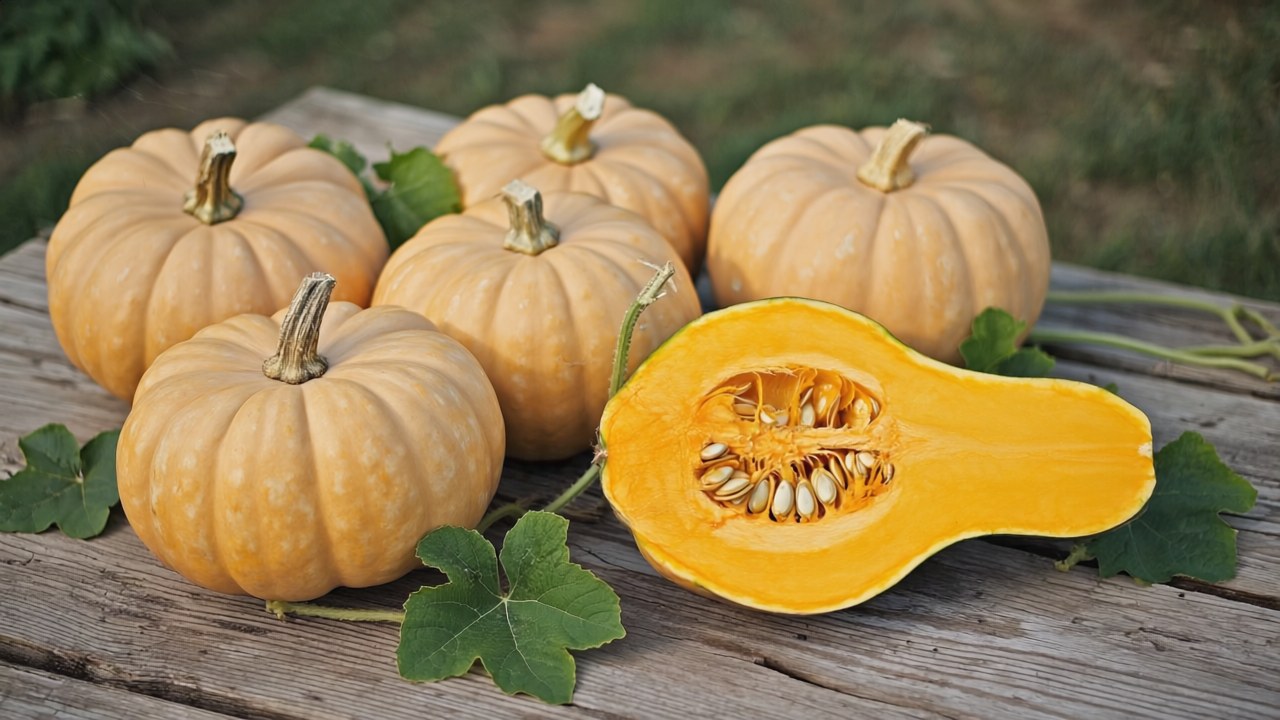
- Fruit: Buff to dull orange, round or teardrop shaped. Size varies a lot. UF/IFAS says mature fruit usually weighs 6 to 12 pounds, while Fedco Seeds describes its strain as about 7 inches long.
- Flavor: Deep orange flesh, sweeter than butternut, and firmer and less stringy than a carving pumpkin.
- Vines: Long. They can run 25 feet or more, and they'll climb anything you give them.
- Toughness: Handles heat and humidity, and Fedco lists it as resistant to squash vine borers, the pest that ruins so many squash plantings.
- Storage: A couple of months even in Florida humidity, and up to a year somewhere dry and well ventilated, according to UF/IFAS.
How to grow Seminole pumpkin
This is a plant that likes a long, warm season and a lot of room. Give it both and it asks for very little else.
When to plant
In frost-free parts of Florida you can plant from August through March, which means right now. In north and central Florida, UF/IFAS suggests February through April. Everywhere else, sow after your last spring frost, once the soil is warm. Seed companies list it at 110 to 120 days, so gardeners in the north should start seeds indoors a few weeks early. Fedco says transplants take about 20 days off the wait. If you live where the season is short, October is the time to order seed and pick a spot for next year.
How to plant
- Pick a spot with 6 to 8 hours of direct sun.
- Sow seeds directly in the ground, or start one or two per small pot and transplant.
- Space plants about 4 feet apart in rows 6 to 9 feet apart. Short on space? Grow them up a sturdy trellis, a fence or, in the old way, a tree.
- Plant more than one so the bees have plenty of flowers to work between.
- Mulch to hold moisture and keep weeds down, but keep the mulch pulled back from the base of the vine.
Care through the season
Water in the early morning. UF/IFAS says that, along with keeping mulch off the stem, helps prevent gummy stem blight, one of the few diseases that bothers this plant. Check the newest leaves for caterpillars and pick them off by hand. If there are too many for that, Bt is an organic option. Steer the vines where you want them as they grow, because they'll root wherever they touch soil (UF/IFAS Hillsborough County).
Each plant makes separate male and female flowers. The female ones have a tiny round pumpkin at the base. Bees usually handle pollination, and planting flowers nearby brings in more of them.
Harvest and storage
The first fruit is usually ready three to four months after planting, and the vine keeps producing until frost. A pumpkin is ripe when the rind has turned a creamy tan-orange, the stem and nearby tendrils have gone brown and dry, and you can't dent the skin with a thumbnail. Cut it off with clippers and leave a short piece of stem attached. Then store it somewhere cool and dry with air moving around it.
You don't have to wait for ripe fruit, either. The young green ones can be cooked like zucchini, skin and all, and the yellow flowers are good raw, stuffed or fried.
How to save Seminole pumpkin seed
Saving the seed is easy. Keeping it true takes a little planning. Squash cross readily within their own species, and this one will cross with butternut or any other moschata growing nearby. UF/IFAS notes that's one reason the fruit's shape and color vary so much. Fedco recommends half a mile between varieties of the same species if you want pure seed.
Most of us don't have half a mile. There are two ways around it. The simple one is to grow only this moschata and no butternut that year. Zucchini and most carving pumpkins belong to a different species and won't cross with it. The careful one is hand pollination: pick a male flower, peel back its petals and brush the pollen onto the center of a female flower, keeping insects off that blossom before and after.
- Choose a fully ripe pumpkin from your healthiest vine and let it cure first.
- Cut it open and scoop the seeds into a bowl.
- Rinse off the pulp, drain, and rinse again.
- Spread the seeds on a paper bag and stir them now and then for a few days until they're completely dry.
- Store them labeled with the variety and the year.
One pumpkin holds far more seed than you'll plant, so there's plenty to hand to a neighbor. That's the part I care about most. This variety exists because people kept doing exactly that, and the growers in Open Sesame will tell you the same thing about theirs. If you're new to seed saving, my interview with Sean Ludden at Nepantla Farms is a good place to start.
Is it good for you?
That deep orange color comes from carotenoids, including beta-carotene, which the body turns into vitamin A. Winter squash also supplies vitamin C, fiber and potassium. A cup of cooked butternut, its close cousin, has about 500 milligrams of potassium (Harvard's Nutrition Source).
I'll be straight about the limits. Harvard points out that there's very little research on winter squash itself, and most of the health claims come from what we know about those individual nutrients. So I won't promise you it cures anything. It's a sweet, filling vegetable with a lot in it, it keeps without a freezer, and if you grow it yourself you know nothing was sprayed on it.
Recipe: Roasted Seminole pumpkin with toasted seeds
This is the simplest way I know to find out what the pumpkin tastes like, and it uses the seeds you aren't saving. The roasting method comes from the UF/IFAS extension office in Hillsborough County.
Ingredients
- 1 Seminole pumpkin (butternut works if you can't find one)
- 2 to 3 tablespoons olive oil
- Salt and pepper
- A pinch of chili flakes or smoked paprika, if you like
- A drizzle of honey or maple syrup to finish
Directions
- Heat the oven to 350°F. Cut the pumpkin in half and scoop out the seeds. Set aside the ones you want to save for planting.
- Cut the pumpkin into wedges about an inch thick. You can leave the skin on and peel it off after roasting.
- Coat both sides with olive oil, salt and pepper and lay the wedges on a baking tray.
- Roast for 20 minutes, turn them over, and roast about 20 minutes more, until they're soft and browned at the edges.
- While that's in the oven, rinse the rest of the seeds, pat them dry and toss them with a little oil and salt. Spread them on a second tray and toast them for 10 to 15 minutes, until golden.
- Finish the wedges with the chili and a little honey, and scatter the toasted seeds over the top.
Where to get Seminole pumpkin seed
You won't find this one on a rack at the hardware store. These small seed companies carry it, and stock comes and goes, so check more than one.
- Truelove Seeds: 20 seeds for $5, grown by Chelsea Askew in Peavine, Georgia. In stock as of this writing.
- Fedco Seeds: Certified organic. Sold out as of this writing, so check back.
- Southern Exposure Seed Exchange: A Virginia seed company that has offered this variety for years. I interviewed Ira Wallace of Southern Exposure for the film.
- SeedsNow: SeedsNow doesn't carry Seminole pumpkin, but it does sell Waltham Butternut, an heirloom from the same species, for about $4 a packet. If you can't get Seminole seed this year, it's the closest thing to grow and cook the same way. Just don't plant the two side by side if you plan to save seed.
Or look for one at a farmers market this month, eat it, and keep the seeds. Just know that if it grew near butternut, next year's pumpkins may surprise you.
Every old variety has people behind it. Open Sesame: The Story of Seeds is about those people and what they're up against. You can watch it here. The first Seed to Table was about Music garlic, which still has time to go in the ground in most places.
Next week on Seed to Table: fava beans, the crop you plant when everything else is finished.