This post contains affiliate links. If you buy through them, I may earn a small commission at no extra cost to you. Learn more.
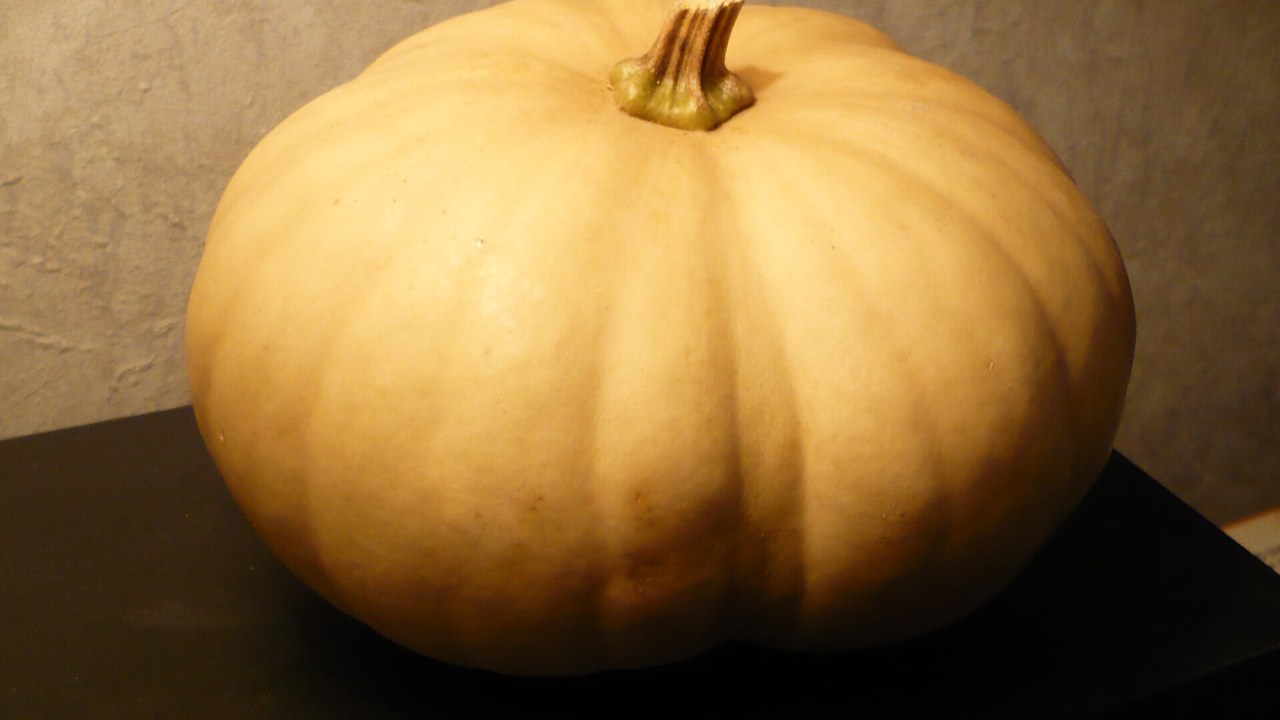
Thanksgiving is next week, so this week's Seed to Table is a pie pumpkin. Not just any pie pumpkin, either. The Long Island Cheese pumpkin was the one American cooks reached for for about 150 years, and then it nearly vanished. It's flat, pale tan and ribbed, and it looks a lot more like a wheel of cheese than a jack-o'-lantern, which is where the name comes from. Here's its story, how to grow it, how to save its seed, and a pie made from scratch.
The story: the pumpkin a seed saver brought back
The Long Island Cheese pumpkin first showed up on the commercial market in 1807, after it caught on with cooks on Long Island, and it stayed popular through the middle of the twentieth century (Hudson Valley Seed). Then seed companies dropped it, and it nearly disappeared.
Ken Ettlinger grew up on Long Island in the 1950s. His family would drive to a local farm to pick up a cheese pumpkin so his mother could make Thanksgiving pie. By the 1970s he noticed the pumpkins were getting hard to find, so he started saving the seed himself. In 2012 he and farmer Stephanie Gaylor started the Long Island Regional Seed Consortium, and the Long Island Cheese Pumpkin Project grew out of that. Today the pumpkin is on Slow Food's Ark of Taste, a list of foods worth saving.
That's the whole seed-saving argument in one pumpkin. A variety didn't vanish because it was bad. It vanished because the market moved on, and it came back because one person remembered his mother's pie. Regional seed matters for the same reason, and Ken Greene and Doug Muller of the Hudson Valley Seed Library made that case well when we talked with them for the film.
What makes it special
- Smooth, stringless flesh. That's why bakers loved it. It purées like silk, with none of the watery, stringy texture of a carving pumpkin.
- It's a moschata. Botanically it's Cucurbita moschata, the same species as butternut and the Seminole pumpkin from October. Moschatas have tough, solid vines that tend to shrug off squash vine borers better than zucchini and most pumpkins.
- It keeps. Like most moschatas, a well-cured cheese pumpkin will sit in a cool room for months, so you can bake with it well past the holidays.
- It's open-pollinated, so it comes true from seed if you prevent crossing.
How to grow Long Island Cheese pumpkin
When to plant
This is a long-season squash, about 100 to 110 days to maturity depending on the seed company. Sow outdoors after your last frost once the soil is warm, or start seeds indoors in pots 2 to 3 weeks earlier. Squash hates having its roots disturbed, so transplant gently. Next spring is the time; this fall is the time to get seed.
How to plant
- Give it room. Hudson Valley Seed's packet calls for 24 inches between plants and 6 feet between rows, and the vines can wander 10 feet or more. A sunny edge of the garden, where vines can run into the lawn, works well.
- Sow 2 or 3 seeds about 1 inch deep per spot and thin to the strongest plant.
- Feed the soil. Squash is a heavy feeder. Dig a shovelful of compost into each planting spot.
- Mulch once the soil is warm, to hold moisture and keep the fruit off bare dirt.
Care and harvest
Water deeply once a week rather than a little every day, and keep water off the leaves to slow powdery mildew. Expect a few pumpkins per plant. Harvest when the skin has turned an even tan and is hard enough that your thumbnail doesn't dent it easily, and always before a hard frost. Cut the stem with a knife, leaving a couple of inches attached, and never carry a pumpkin by its stem. Then cure it somewhere warm and airy for a week or two to harden the skin before storing it somewhere cool and dry.
How to save Long Island Cheese pumpkin seed
Squash seed is easy to clean and dry. The tricky part is crossing. Squash flowers are pollinated by bees, and a cheese pumpkin will cross with any other moschata blooming nearby: butternut, Seminole, neck pumpkins and so on. It generally won't cross with zucchini, acorn squash or most carving pumpkins, which are other species. Isolation distances run to half a mile or more, so most home seed savers hand-pollinate instead. Seed Savers Exchange has a good step-by-step guide with videos, and here's the short version:
- In the evening, look for male and female flowers that will open the next morning. The female has a tiny pumpkin under the bloom. Tape the tips of both shut so the bees can't get in.
- Early the next morning, pick the male flower, peel off its petals, and rub its pollen onto the center of the female flower. Use males from a different plant of the same variety when you can.
- Tape the female flower closed again and tie a piece of yarn or flagging tape around its stem so you know which fruit to save.
- Let that pumpkin ripen fully on the vine. Seed savers often leave it in storage a few more weeks after harvest so the seeds can finish filling out.
- Cut it open, scoop the seeds, and rinse them in a strainer. Spread them on a plate or screen to dry for a week or two, stirring now and then.
- Store them in a labeled envelope or jar somewhere cool and dry. Squash seed keeps for about four years, often longer.
Try to save from at least a handful of plants rather than one, to keep the variety healthy. And you get to eat the pumpkin you saved the seed from, which is a good deal.
Is it good for you?
That deep orange color is beta-carotene, which your body turns into vitamin A. Orange vegetables like pumpkin, squash, carrots and sweet potatoes are some of the best sources there are (NIH Office of Dietary Supplements). Pumpkin also brings fiber and potassium for very few calories. The pie, of course, brings other things, and that's fine once a year. Don't throw away the seeds you aren't saving: tossed with oil and salt and roasted at 325°F until crisp, they're a good snack.
Recipe: Pumpkin pie from a real pumpkin
Most canned "pumpkin" is actually a moschata-type squash, so a cheese pumpkin is about as close as you can get to what was in those old pies.
Make the purée
- Heat the oven to 400°F. Cut the pumpkin in half across the middle, scoop out the seeds, and set the halves cut side down on a lined baking sheet.
- Roast 45 to 60 minutes, until a knife slides in with no resistance.
- Scoop out the flesh and purée it in a food processor or with a potato masher. If it looks watery, let it drain in a fine strainer for 30 minutes. One cheese pumpkin usually makes enough for several pies, and the rest freezes well.
Pie ingredients
- 2 cups pumpkin purée
- ¾ cup packed brown sugar
- 1 teaspoon cinnamon
- ½ teaspoon ground ginger
- ¼ teaspoon nutmeg
- ⅛ teaspoon ground cloves
- ½ teaspoon salt
- 2 large eggs
- 1 can (12 ounces) evaporated milk, or 1½ cups half-and-half
- 1 unbaked 9-inch deep-dish pie crust
Directions
- Heat the oven to 425°F.
- Whisk the purée, sugar, spices and salt together. Whisk in the eggs, then the milk, until smooth.
- Pour into the crust and bake 15 minutes at 425°F.
- Turn the oven down to 350°F and bake another 40 to 50 minutes, until the edges are set and the center still jiggles a little. A knife near the center should come out mostly clean.
- Cool on a rack for at least 2 hours. It slices best the next day, which is handy if you bake on Wednesday.
Where to get Long Island Cheese pumpkin seed
- Hudson Valley Seed Co.: Regional New York seed from the folks who told the pumpkin's story so well.
- Johnny's Selected Seeds: A Maine company with detailed growing information, listed at 108 days.
- SeedsNow, Long Island Cheese: Sold in small packs. Stock comes and goes, so check the page.
And if you buy a cheese pumpkin at a farm stand this month, save the seeds before you roast it. You might get a cross if it grew near butternut, but you might also get the real thing, and that's how Ken Ettlinger started.
A pumpkin that came back because one man remembered his mother's pie. Open Sesame: The Story of Seeds is about people saving what the market left behind, and you can stream or buy it here. Last week was the Cherokee Trail of Tears bean, a seed with a very different story.
Next week, the day before Thanksgiving: collards.
Top photo: Badagnani, CC BY-SA 3.0, via Wikimedia Commons, cropped.