
Some heirlooms come with a pretty story. This one comes with a hard one. The Cherokee Trail of Tears bean is a black-seeded pole bean that a Cherokee family kept for generations, and the family story says their ancestors carried it west on the forced removal of 1838 and 1839. This week's Seed to Table is about that bean, the man who shared it, how to grow it, and how to save it, which happens to be about the easiest seed saving there is.
The story: a bean carried west
In the 1830s the U.S. government forced the Cherokee Nation out of its homelands in the Southeast and marched the people to Indian Territory, in what's now Oklahoma. Thousands died on the way (Wikipedia has the history, with sources). Families brought what they could, and seed was part of it.
This bean came to the rest of us through Dr. John Wyche of Hugo, Oklahoma. He was Cherokee, a dentist, a serious gardener, and one of the founding members of Seed Savers Exchange. He also once owned a circus, which explains the elephant manure that went into his garden soil. Seed Savers' 1986 yearbook remembers him sending out thousands of free seed packets every year to anyone who mailed him postage (his tribute, republished here). Among them were seeds his people had brought over the Trail of Tears. Seed Savers still lists the bean as shared by "the late Dr. John Wyche" (Seed Savers Exchange).
It's worth being honest about what we know. The connection to the removal is a family history, passed down by the people who kept the bean, not something written in a ledger. That's true of most heirlooms. Their records are the gardens they kept growing in.
Seed Savers Exchange itself started in 1975 with two family seeds that had crossed an ocean from Germany, a pink tomato and a purple morning glory. Its co-founder, Diane Ott Whealy, is one of the seed keepers in Open Sesame. The organization grew because people like Dr. Wyche kept mailing seeds to strangers.
What makes this bean special
- Two crops in one. Pick the pods young and they're snap beans, ready in about 65 days (Baker Creek). Leave them and you get small, shiny black dry beans for winter.
- It climbs. It's a vigorous pole bean, so give it something tall to grab.
- It's open-pollinated, and it comes true from saved seed almost every time.
- It carries a story you can tell every time you hand someone a few seeds, which is the best reason to grow any heirloom.
How to grow Cherokee Trail of Tears beans
When to plant
Beans hate cold. Sow them after your last frost, when the soil has warmed up, and Baker Creek suggests waiting about two weeks past your last frost date. Planting too early in cold, wet soil is the most common way to lose bean seed. In November there's nothing to plant, but it's a good time to get seed and plan where your trellis goes.
How to plant
- Set up support first. A trellis, fence, string tepee or a few tall poles, at least 6 feet high. Putting it in after the beans come up means stepping on roots.
- Sow about 1 inch deep, with seeds a few inches apart along the base of the support.
- Go easy on fertilizer. Beans make much of their own nitrogen with help from soil bacteria, and Baker Creek notes they don't need heavy feeding if the soil has some organic matter in it. Too much nitrogen gives you leaves instead of beans.
- Water evenly, especially once they flower.
Care and harvest
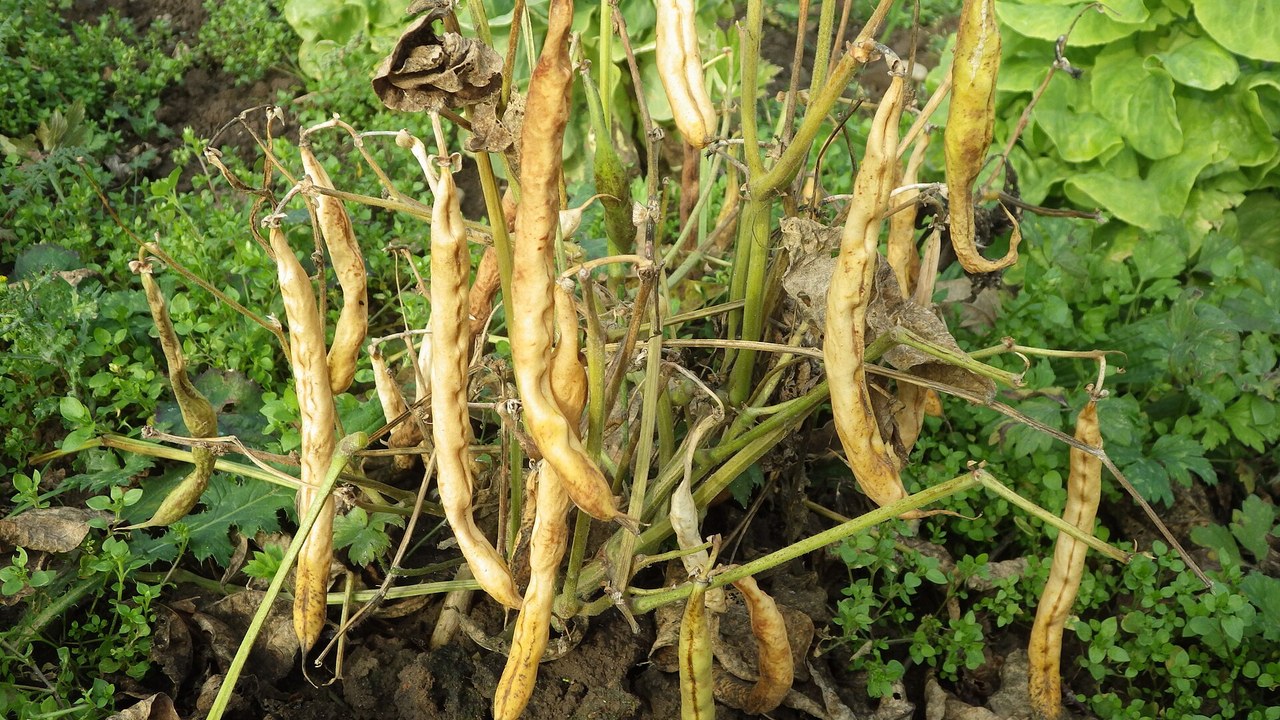
For snap beans, pick the pods while they're slender and before the seeds bulge, and keep picking. The more you pick, the more the plant makes. For dry beans, stop picking at some point and let the pods stay on the vine until they're tan, papery and rattle when you shake them.
How to save Cherokee Trail of Tears bean seed
If you've never saved seed before, start here. Common beans pollinate themselves, usually before the flower even opens, so crossing between varieties is rare. Extension guides suggest about 10 to 20 feet between varieties in a home garden (UGA Extension), and a little more if you want to be sure.
- Choose a few of your healthiest plants and let all their pods dry on the vine. Don't pick snap beans from them.
- When the pods are dry and rattling, pick them. If frost is coming first, pull the whole plants and hang them upside down somewhere dry.
- Shell the beans. Small amounts are easy by hand. For a lot, put the pods in a pillowcase and walk on it.
- Let the beans dry another week or two on a tray. A good test: a fully dry bean shatters when you hit it with a hammer instead of squashing.
- Some seed savers put the dry seed in the freezer for a few days to kill any bean weevils hiding inside.
- Store them in a labeled jar somewhere cool and dark. Bean seed stays good for several years.
Every bean you save is another plant next year, so a single row gives you plenty to share. That's exactly how this one survived.
Is it good for you?
Dry beans are some of the best food you can grow: protein, lots of fiber, folate, iron and potassium, all for very little money. One thing to know about all common beans is that raw or undercooked dry beans contain a lectin that can make you sick. Kidney beans have the most, but the rule is the same for any dry bean: soak them, then bring them to a real boil before you turn them down to simmer, and don't cook dry beans from raw in a slow cooker on low (FDA Bad Bug Book).
Recipe: A simple pot of black beans
In Cherokee cooking, beans go into bean bread, mixed with cornmeal and boiled in corn husks, and that recipe belongs to the cooks who grew up with it. This is the everyday version: a pot of beans that's good on its own, over rice or with cornbread.
Ingredients
- 1 pound dry black beans (about 2½ cups)
- 1 onion, chopped
- 4 cloves garlic, smashed
- 2 tablespoons olive oil or bacon fat
- 2 bay leaves
- 1 teaspoon ground cumin (optional)
- Salt and black pepper
- A splash of cider vinegar or a squeeze of lime to finish
Directions
- Rinse the beans, pick out any stones, and soak them overnight in plenty of water. Drain.
- In a big pot, cook the onion in the oil over medium heat until soft, about 8 minutes. Add the garlic and cumin and cook one more minute.
- Add the beans, bay leaves and enough water to cover by 2 inches. Bring to a full boil for 10 minutes, then turn it down to a gentle simmer.
- Simmer, partly covered, for 1 to 2 hours, until the beans are completely tender. Small home-grown beans often cook faster than store-bought ones. Add water as needed.
- Salt generously once the beans are soft, then simmer 15 more minutes. Finish with pepper and the vinegar or lime. Like most bean pots, it's better the next day.
Where to get Cherokee Trail of Tears bean seed
- Seed Savers Exchange: Where Dr. Wyche shared it, so this is the place I'd buy it first. Seed Savers is a nonprofit, and buying from them pays for keeping thousands of other varieties alive.
- Baker Creek Heirloom Seeds: Also carries it, with growing notes on the page.
And if you know someone who grows it, ask for a handful. Dr. Wyche would have liked that.
A bean that made it through one of the worst chapters in American history because a family wouldn't let it go. Open Sesame: The Story of Seeds is about the seed keepers doing that work today, and you can stream or buy it here. Last week's post was how to grow Hopi Blue corn.
Next week on Seed to Table: Long Island Cheese pumpkin, just in time for pie.
Top photo: bush beans left to dry on the plant for seed, by Josef Schlaghecken, CC BY-SA 4.0, via Wikimedia Commons, cropped. It shows seed saving in general, not the Cherokee variety.