This post contains affiliate links. If you buy through them, I may earn a small commission at no extra cost to you. Learn more.
Last week I promised you dinosaur kale, so here it is. Lacinato is the plant still standing in the garden after the first hard frost, looking a little prehistoric, and tasting better than it did in September. This week's Seed to Table is about why the cold is good for it, how to grow it, and how to save its seed, which takes a little patience because kale doesn't flower until its second year.
The story: Tuscany's black cabbage
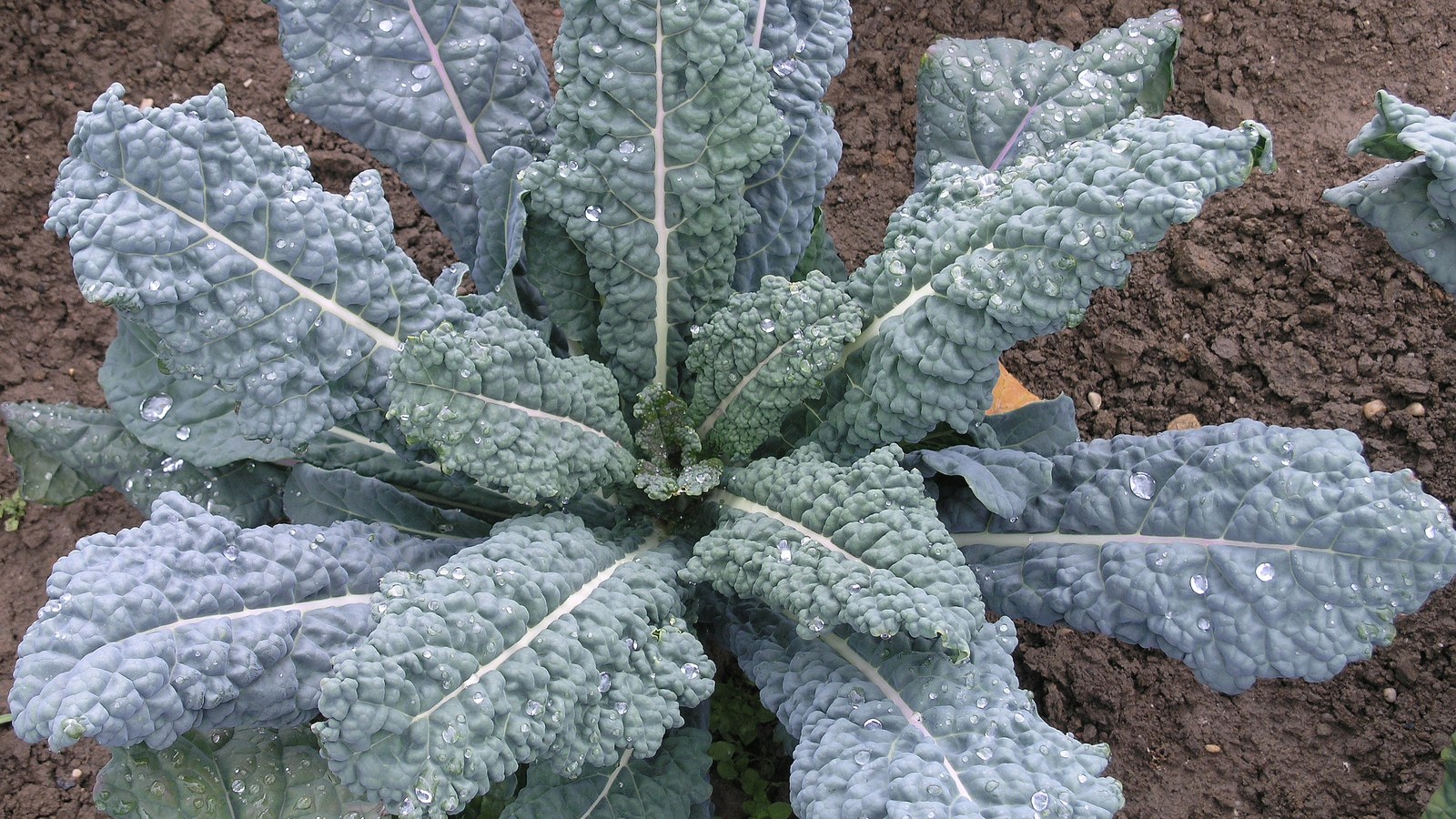
In Italy it's cavolo nero, which means black cabbage. You'll also see it sold as Tuscan kale, Nero di Toscana, or dinosaur kale, a nickname that comes from the bumpy, pebbled leaves. It's been grown in Tuscany for centuries and is usually dated to at least the 1700s there. It's the kale that goes into ribollita, the thick Tuscan bread and bean soup, and minestrone (Wikipedia has a good summary with sources).
What I like about this one is how ordinary it was for most of its life. It wasn't bred in a lab or launched with a marketing campaign. Italian families kept growing it in kitchen gardens and saving the seed, and most Americans had never heard of it before the 1990s. Now it's in every grocery store. That's how a lot of heirlooms survive: somebody's grandmother kept it going long enough for the rest of us to notice.
Botanically it's Brassica oleracea, the same species as cabbage, broccoli, cauliflower, collards, Brussels sprouts and kohlrabi. That one fact matters a lot when we get to seed saving.
What makes Lacinato special
- It gets sweeter in the cold. Researchers at Jacobs University Bremen found that kale exposed to cold breaks down complex carbohydrates into smaller sugars, which also lowers the freezing point inside its cells (Constructor University). In other words, the sugar is partly antifreeze, and you get to eat it.
- It looks like a little palm tree. You harvest the lower leaves and let the top keep growing, so by late fall you have a bare trunk with a tuft of leaves at the top. Plants usually reach 2 to 3 feet.
- It's tender for a kale. The long, narrow leaves are less tough than curly kale, which is why it works raw in salads once you take the rib out.
- It's open-pollinated. Save the seed and you get Lacinato again, as long as it didn't cross with anything (more on that below).
How to grow Lacinato kale
When to plant
Kale is a cool-weather crop, so you get two windows. In spring, start seeds indoors about 6 to 8 weeks before your last frost and set the plants out a few weeks before that date. For a fall crop, the one that gets frost-sweetened, sow in mid to late summer so the plants are full size by the time nights turn cold.
If you're reading this in late October, it's too late to start from seed in most of the country, but it's a fine time to buy a few transplants if you're somewhere mild, and a perfect time to harvest if you already have plants going. Kale handles frost well and can hold through temperatures down around 10°F (Gardener's Supply), so leave it in the ground long after the tomatoes are pulled.
How to plant
- Pick a sunny spot with rich soil. Kale will take some shade, but it grows slower.
- Sow seeds about ¼ to ½ inch deep, or set transplants at the same depth they were growing in their pots.
- Space plants 12 to 18 inches apart. They look small at first, but those leaves get long.
- Feed the soil. Kale is a leafy crop and likes nitrogen. Compost works, and if you grew a fava cover crop last winter, this is the bed to put it in.
Care and harvest
Keep the soil evenly moist, especially in summer heat, and mulch around the plants. The main pests are cabbage worms, the green caterpillars of those white butterflies, and aphids. Floating row cover over young plants keeps the butterflies off, and in fall the cold slows the bugs down anyway.
Start picking when the leaves are about the length of your hand. Take the lowest leaves first and never strip more than about a third of the plant at once. For the sweetest flavor, wait until you've had a frost or two. Vanderbilt's garden program puts it simply: harvest after the first frost, and it gets a little sweeter with each one after (VUMC).
How to save Lacinato kale seed
This is where kale asks for patience. It's a biennial, which means it grows leaves the first year and only flowers and makes seed after it's been through a winter. In mild climates you can just leave the plants in the ground. Where winters get really cold, UC's seed saving guide suggests digging the plants in fall, potting them up and keeping them somewhere around 32 to 40°F until spring, then replanting (UC ANR).
The bigger issue is crossing. Kale is pollinated by insects, and it will happily cross with any other Brassica oleracea flowering nearby: other kales, collards, cabbage, broccoli, cauliflower, Brussels sprouts or kohlrabi. Seed saving guides list isolation distances anywhere from 800 feet to half a mile (SARE), and some go as far as a mile. In practice, most home seed savers let only one oleracea crop flower in a given spring. Your broccoli and cabbage are usually harvested before they bloom, so that's easier than it sounds. Red Russian and Siberian kale are a different species and won't cross with Lacinato.
- Keep several plants, not just one. Brassicas don't do well when you save from too few, so half a dozen is a good minimum and more is better.
- In spring, let them bolt. You'll get tall stalks covered in small yellow flowers, and the bees will find them.
- The flowers turn into thin pods. When most of the pods are tan and dry, cut the stalks.
- Hang them upside down in a paper bag or over a sheet for a week or two so they finish drying.
- Crush the pods (stomping on the bag works) and pour the seeds and chaff into a bowl. Gently blow or use a fan to carry off the chaff.
- Store the small round seeds in a labeled jar somewhere cool and dry. They keep for years, and a few plants will give you far more seed than you can use.
That last part is the fun of it. One spring of letting your kale go to seed and you'll have enough to share with every gardener you know. Seed libraries love brassica seed for exactly that reason, and if you've never been to one, the seed library in Mora, New Mexico is a good example of what they do.
Is it good for you?
Very. Dark leafy greens like kale are some of the best food sources of vitamin K, and kale also brings vitamin C, vitamin A and fiber, in a vegetable with very few calories.
One caution worth knowing. If you take a blood thinner like warfarin (Coumadin), vitamin K affects how it works. The NIH says people on warfarin don't need to avoid greens, but should keep the amount of vitamin K they eat fairly steady from day to day, because a sudden change can affect the medication (NIH Office of Dietary Supplements). So if you go from no kale to a big bowl every night, talk to your doctor first.
Recipe: Weeknight ribollita
Ribollita means "reboiled," because it started as a way to use up yesterday's soup and stale bread. It's better the second day, so make a big pot. This is a simple version, and Lacinato is the right kale for it.
Ingredients
- 3 tablespoons olive oil, plus more for serving
- 1 onion, 1 carrot and 1 celery stalk, chopped
- 3 cloves garlic, sliced
- 1 can (14 oz) chopped tomatoes
- 2 cans cannellini beans, drained, or about 3 cups home-cooked
- 1 big bunch Lacinato kale, ribs pulled out, leaves sliced into ribbons
- 5 cups vegetable or chicken broth
- A Parmesan rind, if you have one
- 3 or 4 thick slices of day-old crusty bread, torn up
- Salt, pepper and a pinch of red pepper flakes
Directions
- Warm the oil in a big pot over medium heat. Cook the onion, carrot and celery for about 8 minutes, until soft.
- Add the garlic and pepper flakes and cook one more minute.
- Add the tomatoes, beans, broth and Parmesan rind. Mash about a cup of the beans against the side of the pot to thicken it. Bring to a simmer.
- Stir in the kale and simmer for 20 to 30 minutes, until it's completely tender.
- Stir in the bread and cook another 10 minutes, until it falls apart and the soup is thick. Add a little water if it gets too stiff. Season with salt and pepper.
- Serve with a good pour of olive oil on top. Tomorrow, reheat it and it'll be even better, which is the whole point.
Where to get Lacinato kale seed
Lacinato is easy to find, which is a nice change after Seminole pumpkin. Fall is a good time to buy for next year, before the spring rush.
- SeedsNow, Black Tuscany kale: The Tuscan type, about $3.99 for a sampler pack of roughly 50 seeds. In stock as of this writing.
- Southern Exposure Seed Exchange, Lacinato: A Virginia seed company that focuses on heirlooms and open-pollinated varieties. It's also where Ira Wallace, who's in the film, has worked for years.
- Hudson Valley Seed Co., Rainbow Lacinato: Not the classic, but a fun one. It's a cross between Lacinato and the very cold-hardy Redbor by breeder Frank Morton, with purple stems, and a lot of the plants turn almost black in winter.
And if a neighbor has Lacinato going to seed next spring, ask. That's how this variety got here in the first place.
A kale that Tuscan gardeners kept alive for a few hundred years, one seed jar at a time. Open Sesame: The Story of Seeds is about the people still doing that today, and you can stream or buy it here. Missed last week? Here's how to grow fava beans, the crop you plant when everything else is done.
Next week on Seed to Table: Hopi Blue corn.
Top photo: goldlocki, CC BY-SA 3.0, via Wikimedia Commons, cropped.