Did you realize that 2013 is the International Year of Quinoa? When I started buying it about ten years ago, it was little known in the Western world and had no international celebrations in its honor to my knowledge. Back then I pronounced it ‘keen-oh-a’ which probably gave those in the know something to chuckle about (it’s commonly pronounced ‘keen-wa’). Quinoa certainly is on a tear – it seems like every month its price rises just a little bit higher.
Quinoa is not officially a grain.
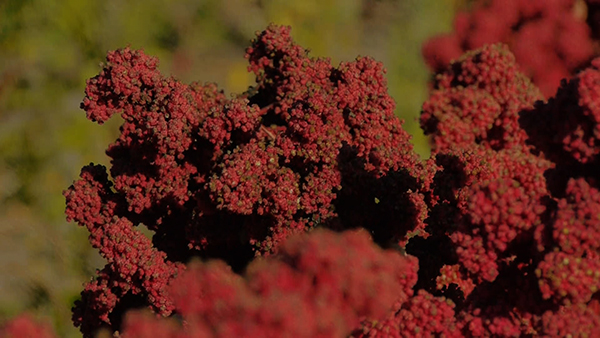
In fact Quinoa belongs to the same family of plants as sugarbeets and spinach. The tiny seeds are an excellent meat substitute. They have approximately 18% protein existing as protein in its most bio-available form. As it happens, quinoa is one of the most nutritious seeds per unit of weight that exists. It has a delicious nutty flavor. It has no gluten. It is quick to prepare. It makes a delicious alternative to rice. It even comes in gorgeous multi-colors – the deep maroon is my favorite (but it’s also the priciest). Astronauts may be eating a lot of quinoa. NASA released this finding in 1993:
“While no single food can supply all the essential life sustaining nutrients, quinoa comes as close as any other in the plant or animal kingdom.”
Quinoa’s many positive attributes have not gone unnoticed.
Quinoa has tripled in price since 2006. In Bolivia, Quinoa is now one of their main ag exports having increased from $2.5 million to an impressive $65 million per year. This has transformed what was once a national staple in countries such as Bolivia and Peru, into an unaffordable Western luxury. The price has risen so high, that some local farmers can no longer afford to eat their own crops. Local communities that once depended on Quinoa increasingly turn to Western corn and soy brought to them in multi-colored packages and cans of subsidized, cheap, processed food. According the The Guardian, it was Bolivian President, Evo Morales who suggested the special recognition for Quinoa, stating “For years [quinoa] was looked down on just like the indigenous movement. To remember that past is to remember discrimination against quinoa and now after so many years it is reclaiming its rightful recognition as the most important food for life.”
This is an important observation, but farmers in Bolivia and Peru need to be adequately compensated for their newly popular crop and it’s not clear that this is happening. Quinoa is labor-intensive to harvest and much of the money is made on the processing end. If you eat Quinoa, remember to look out for certified fair trade brands.
It would be great if North Americans were to eat even more Quinoa than we do. It is a great alternative to a diet heavily ladened with corn and soy. But if we replaced even an extremely modest percentage of our massive corn/soy consumption with Quinoa, it would be impossible for Bolivia and Peru to deliver.
Interestingly, Quinoa is not well-suited to grow in mono-cultures. This may be part of the reason it hasn’t been more widely adopted in the United States. For the sake of increasing food sovereignty globally and improving our access to healthy food locally, quinoa is one seed that would be wonderful to see grown in the U.S. more frequently. It’s time to put our monoculture ways behind us and bring greater seed diversity to North American crops. That would also be something to celebrate.